
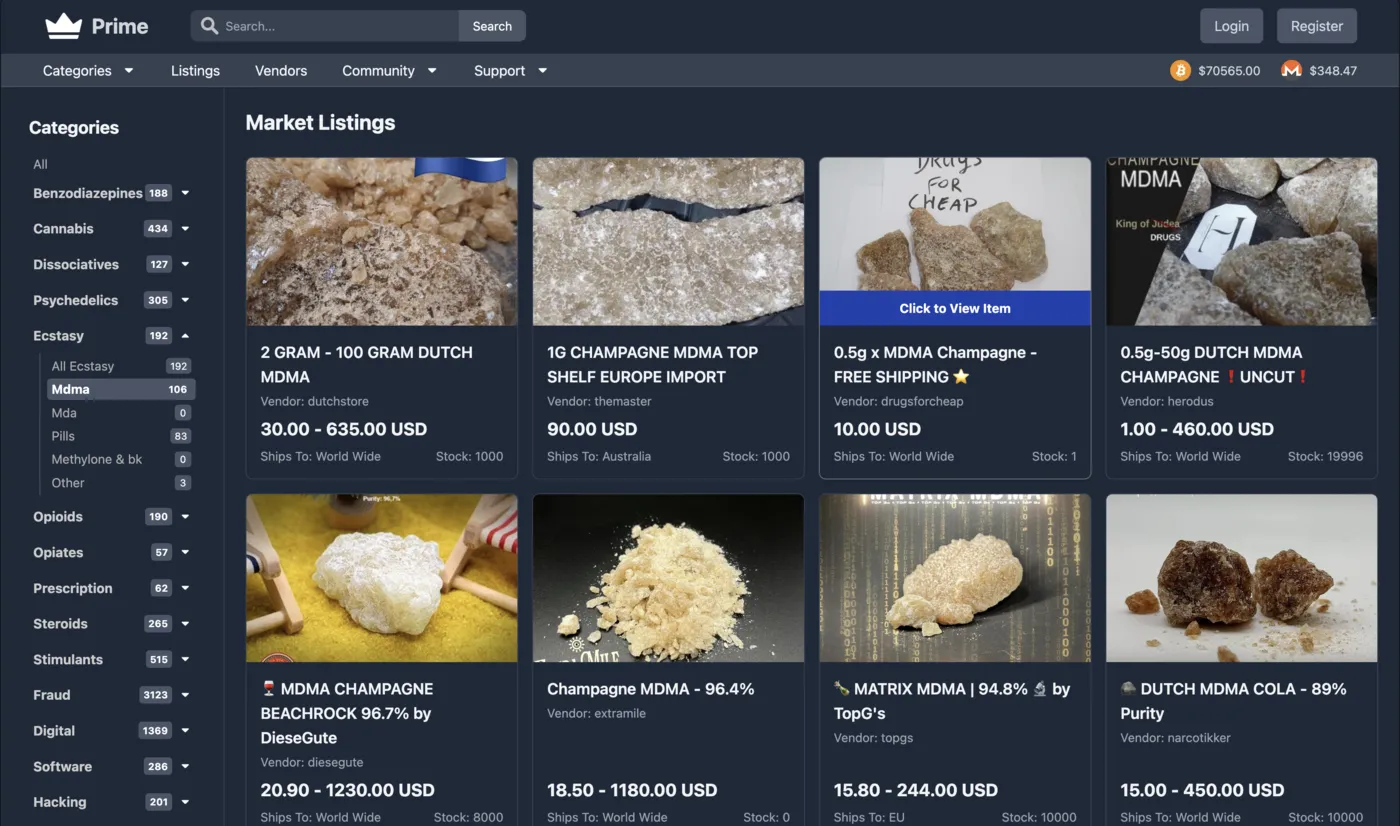
Prime Market has emerged as one of the most discussed anonymous marketplaces in recent years. While dozens of platforms compete for user attention, Prime Market has consistently maintained uptime, expanded its vendor base, and introduced features that others have struggled to replicate. This article is a technical and practical overview of what the platform offers — and where it falls short.
Platform Architecture
Unlike many competitors that rely on a single-server setup with basic load balancing, Prime Market operates on a distributed infrastructure designed for resilience. The platform uses multiple mirrored onion services, each independently capable of handling full traffic loads. This approach means that even if one mirror goes down, the marketplace remains accessible through alternates.
The backend stack is custom-built rather than forked from leaked marketplace source code — a critical distinction. Forked codebases often carry inherited vulnerabilities that have been publicly documented and exploited. Prime Market's decision to build from scratch required more upfront investment but resulted in a platform with fewer known attack vectors.
Discovery and Navigation
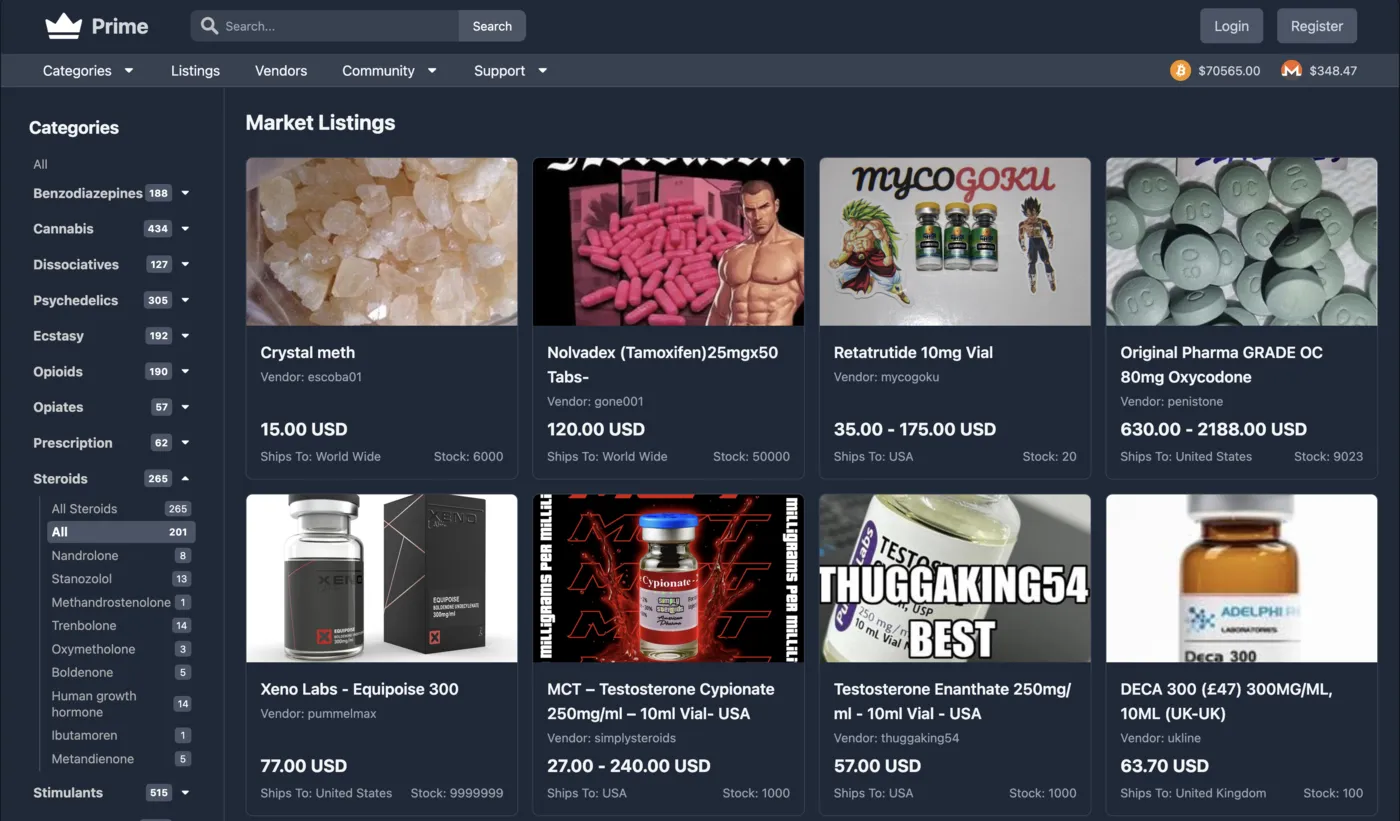
Product discovery on Prime Market takes a multi-layered approach. The main navigation splits inventory into broad categories — each with nested subcategories that can be filtered by region, price range, vendor rating, and shipping method. A full-text search engine indexes product titles, descriptions, and tags, returning ranked results within seconds.
What distinguishes Prime Market's search from competitors is the weighted ranking algorithm. Rather than showing results purely by listing date, the algorithm factors in vendor trust score, order completion rate, and dispute history. This means a newer vendor with exceptional metrics can surface above an established seller with a declining reputation.
The Escrow Engine
Escrow is the backbone of any marketplace — it's what prevents exit scams on individual transactions. Prime Market supports two escrow models: standard custodial escrow and 2-of-3 multisig.
Standard escrow works as expected: the buyer's cryptocurrency is held by the platform until delivery is confirmed. The funds are then released to the vendor. In dispute scenarios, a staff mediator steps in.
Multisig escrow removes the marketplace as a single point of failure. A 2-of-3 multisig Bitcoin transaction requires two of three parties (buyer, vendor, marketplace) to sign off before funds move. Even if the marketplace is compromised, an attacker cannot unilaterally seize funds.

Cryptocurrency Support
Prime Market accepts both Bitcoin (BTC) and Monero (XMR). While BTC remains popular due to its liquidity and wider exchange support, the platform has been actively encouraging migration to Monero. The reasoning is straightforward: Bitcoin transactions are traceable on a public ledger. Even with coin mixing, blockchain analysis firms have demonstrated the ability to de-anonymize BTC flows.
Monero, by contrast, uses ring signatures, stealth addresses, and RingCT to obscure sender, receiver, and amount by default. There's no opt-in privacy — every transaction is private. For the marketplace's threat model, this is a significant advantage.
Useful Resources
Vendor Ecosystem
Becoming a vendor on Prime Market requires posting a bond — a refundable deposit that serves as a deterrent against scam accounts. The bond amount varies by category but typically ranges between $200-$500 in cryptocurrency. Vendors who maintain clean records can eventually recover their bond or have it reduced.
The reputation system operates on a rolling window: the most recent 90 days of transactions carry heavier weight than older history. This prevents long-dormant accounts from coasting on outdated trust while rewarding consistently active vendors.
Vendor levels (1 through 4) unlock progressively: higher withdrawal limits, priority listing placement, and access to promotional tools. Level 4 vendors — those with 500+ completed transactions and a 98%+ satisfaction rate — receive a verified badge visible on all their listings.
User Experience Assessment
The interface is functional rather than flashy. Navigation is intuitive, pages load quickly (by onion service standards), and the search works well. The design clearly prioritizes speed and security over aesthetics — no JavaScript frameworks, no external CDN dependencies, no tracking pixels.
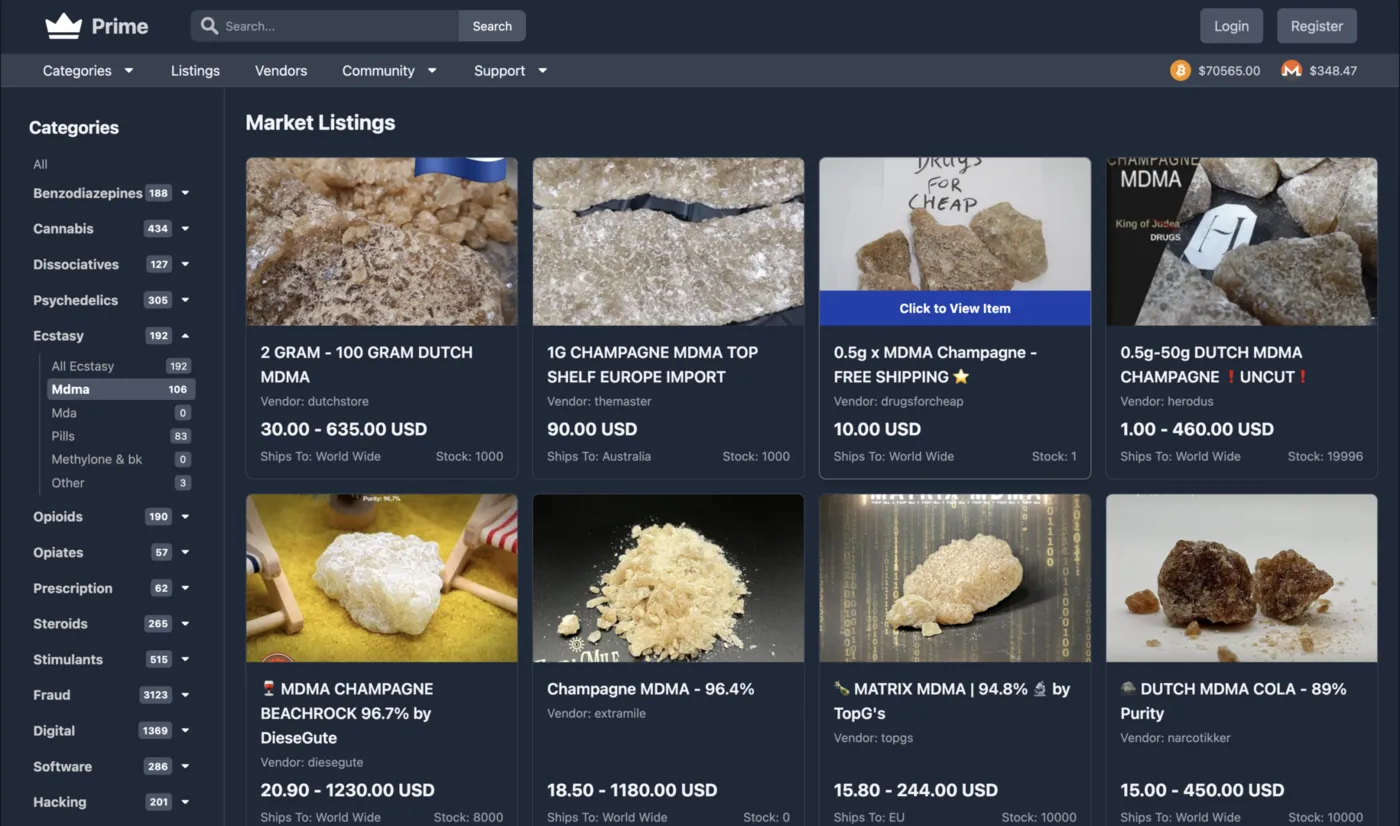
Areas for improvement include the messaging system, which lacks threaded conversations, and the mobile experience, which is serviceable but not optimized. These are common limitations in onion-hosted platforms where JavaScript is deliberately minimized.
The Bottom Line
Prime Market isn't perfect, but it's built on a solid technical foundation with user safety as a genuine priority rather than a marketing bullet point. The multisig escrow, Monero-first approach, and rolling reputation system set it apart from platforms that are merely reskinned clones of leaked source code.
Whether you're a buyer evaluating platforms or a vendor considering where to set up shop, understanding these mechanics is essential for making an informed decision.